
“Truth is not something outside to be discovered, it is something inside to be realized.
Meditation is nothing but a method to make you aware of the truth within,
it is the bridge that connects you back to the divine.”
– Ushusti
The Portal building is the official starting point of the meditation route guided tour. The Portal serves as the threshold between the outside world, with all its noise and urgency, and the peaceful and relaxed manners of Gigiers Oino. Here staff will orient travelers to the four-stop sequence, explain the concept behind the route, and provide a brief overview of MysticGek Ushusti’s teachings as context for what awaits at the summit. Each stop is not merely a waypoint but a functional shift in the traveler’s state of being.
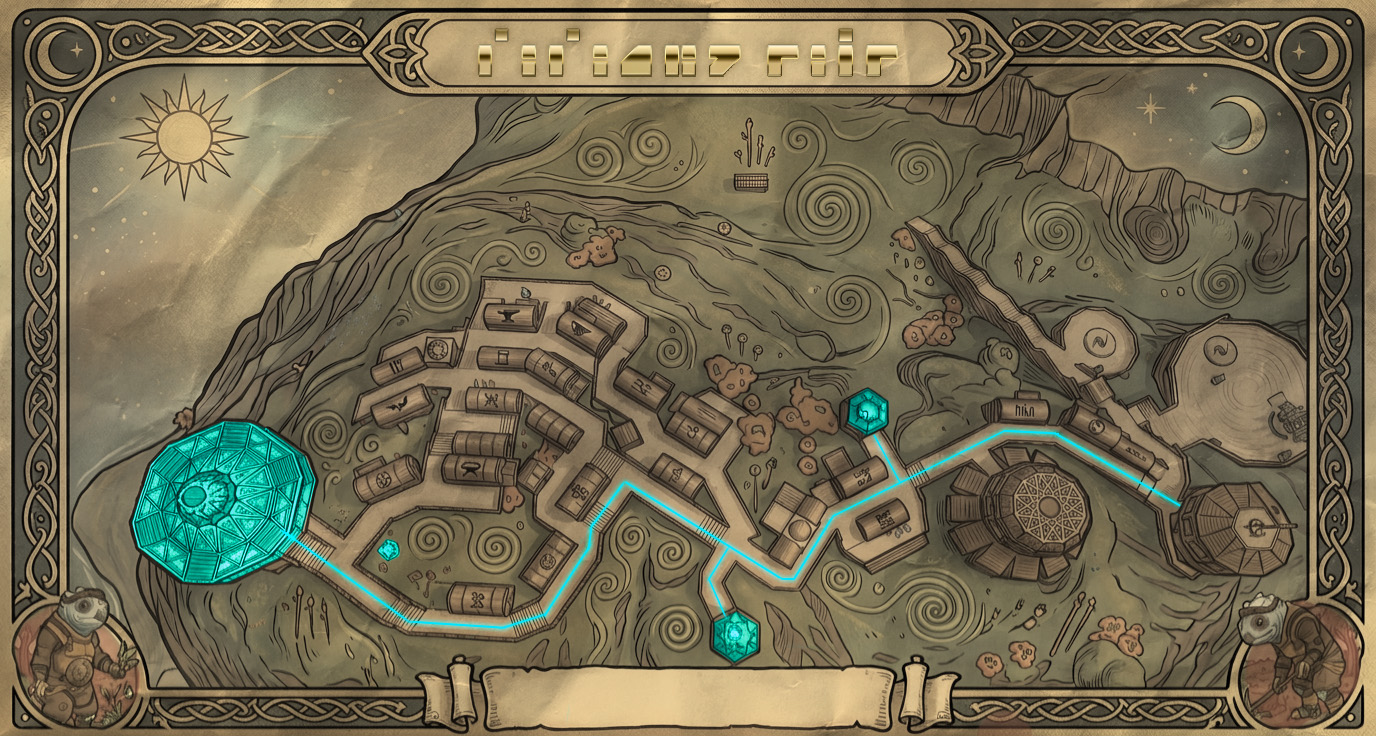
3. Travelers emerge onto the Stillness Plaza, an open-air space at the summit adjacent to the main meditation center. The plaza’s defining feature is a large quartz formation that emits measurable calming frequencies, creating an ambient field that visitors can feel as a kind of settled, low-level resonance in the body. No structured activity is required here; the plaza invites travelers to simply exist within the frequency environment, letting the quartz do its quiet work. The open sky, the elevation, and the proximity to the meditation center all contribute to a sense of arrival. This is the final preparation stage, where body and mind, already relaxed and clarified by the previous stops, are held in stillness long enough for the deeper inward orientation to become possible.
4.The fourth and final stop is the main meditation center, the destination the entire route has been building toward. Here, trained guides introduce visitors to specific meditation techniques drawn from MysticGek Ushusti’s scriptures, presented both as practical instruction and as a philosophical framework for understanding the journey they have just completed. The route’s progression (relaxation, clarity, stillness, and then meditation) is explained as a map of the human system: body, mind, and finally soul. The center’s interior is designed to support sustained inward attention, and visitors may stay for structured sessions or personal practice. Ushusti’s texts are available for reading, and guides can contextualize specific passages in relation to what travelers experienced at each shrine and plaza along the way.
Outside the main temple, two open-air shrines serve as accessible points of reflection for anyone in the village, resident or traveler. Unlike the temple, which involves structured practice, the shrines are informal and unscheduled. Each shrine is oriented toward a different aspect of Ushisti’s teachings, one addressing the relationship between a being and its physical labor, the other addressing the inner life and its connection to community. Travelers can visit at any hour. Local Geks often pause at the shrines between work shifts, and witnessing that ordinary, unremarkable devotion is described by returning visitors as one of the most affecting parts of a stay in Gigiers-Oino. No guide is required, though one is available for those who want context on the specific scriptures inscribed at each site.
They are accessible at any hour. The shrines are not monuments in the tourist sense; they are active parts of daily Gek life, visited before fishing trips and after the evening meal.
Spending time at either shrine, especially at dusk when the yellow sky deepens toward amber, offers a quality of stillness that most travelers find difficult to replicate elsewhere in the Eissentam Galaxy.
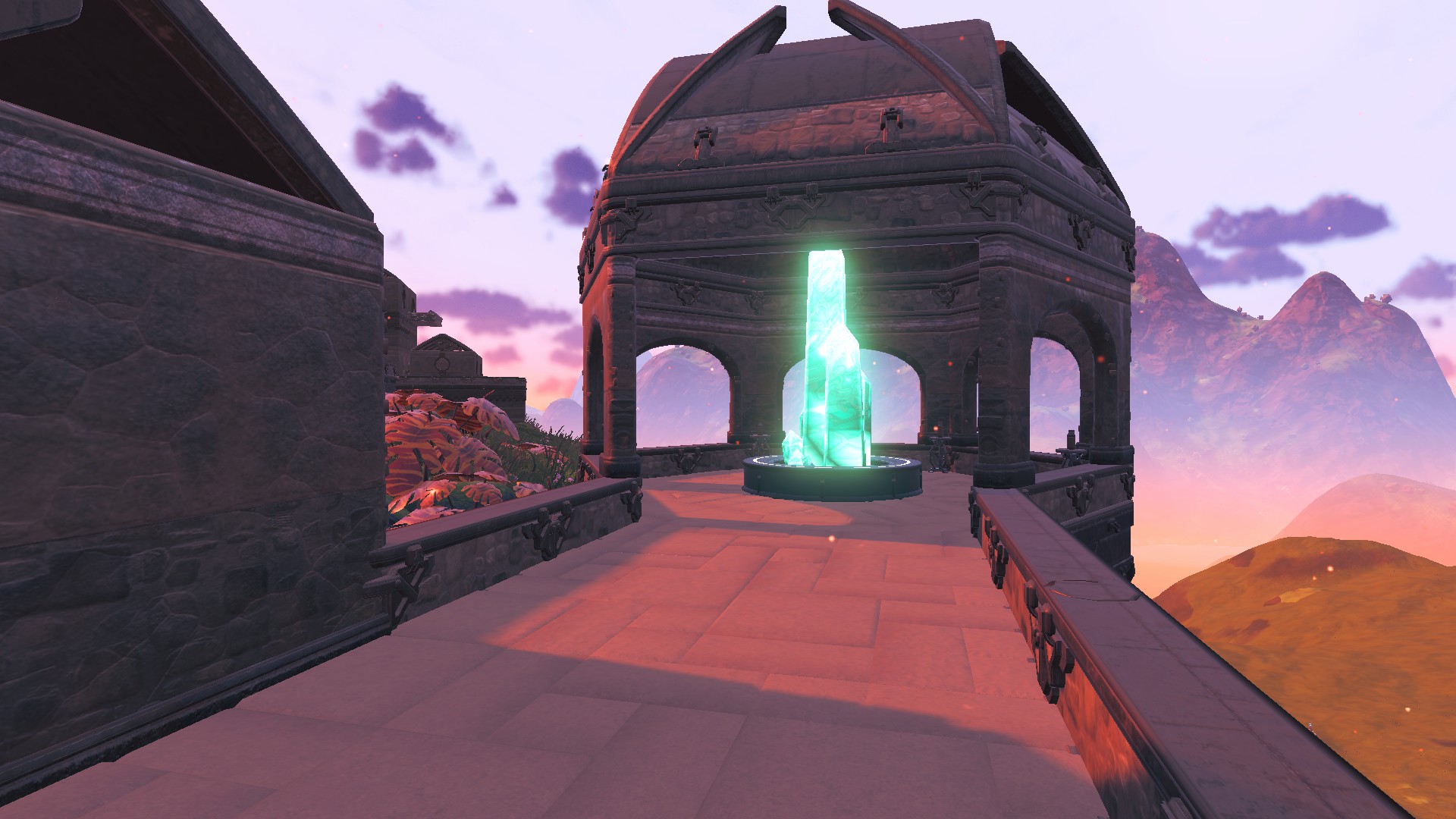
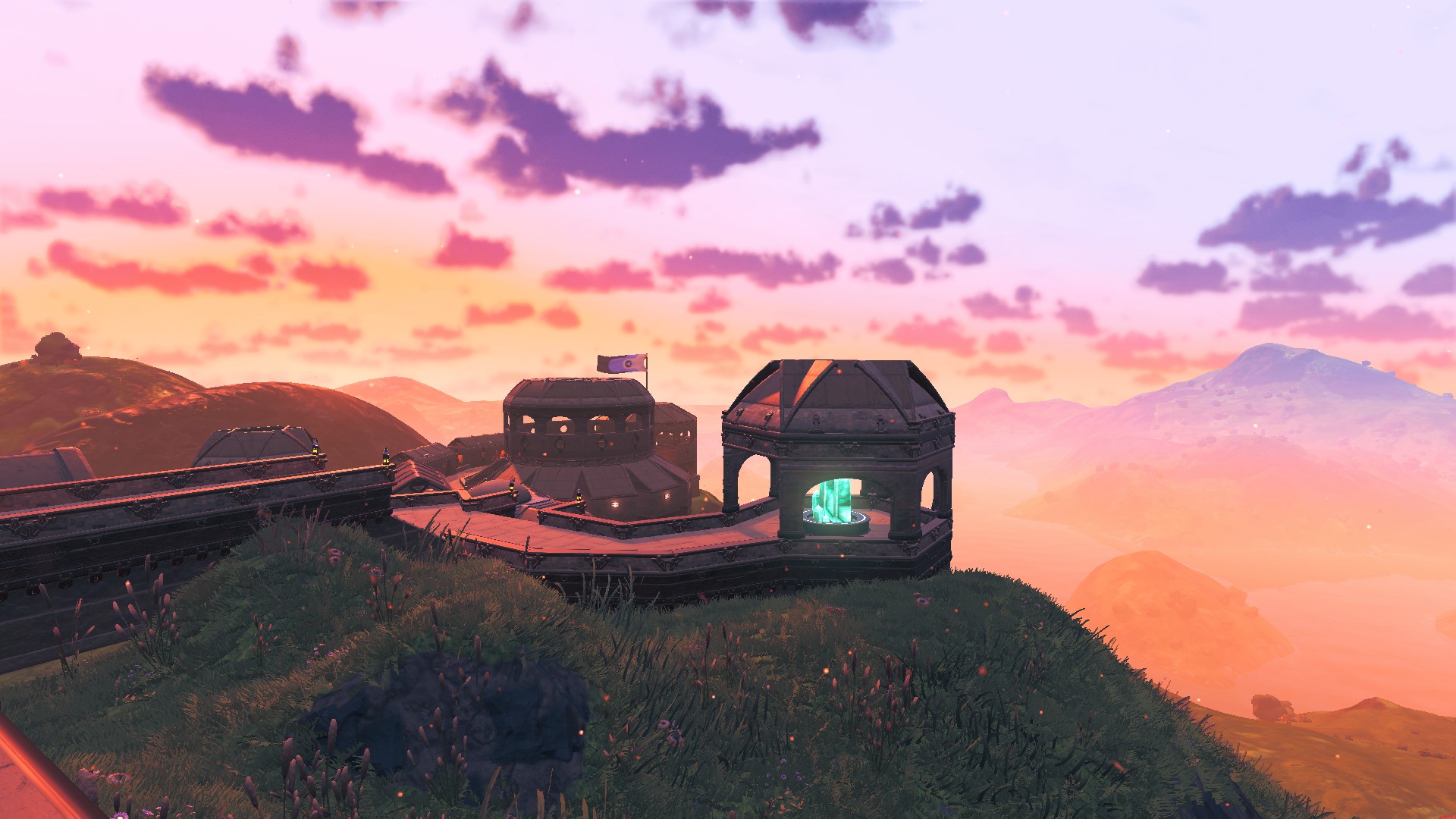
Outside the main temple, two open-air shrines serve as accessible points of reflection for anyone in the village, resident or traveler. Unlike the temple, which involves structured practice, the shrines are informal and unscheduled. Each shrine is oriented toward a different aspect of Ushisti’s teachings, one addressing the relationship between a being and its physical labor, the other addressing the inner life and its connection to community. Travelers can visit at any hour. Local Geks often pause at the shrines between work shifts, and witnessing that ordinary, unremarkable devotion is described by returning visitors as one of the most affecting parts of a stay in Gigiers-Oino. No guide is required, though one is available for those who want context on the specific scriptures inscribed at each site.
They are accessible at any hour. The shrines are not monuments in the tourist sense; they are active parts of daily Gek life, visited before fishing trips and after the evening meal.
Spending time at either shrine, especially at dusk when the yellow sky deepens toward amber, offers a quality of stillness that most travelers find difficult to replicate elsewhere in the Eissentam Galaxy.
An open-air space sitting at the summit adjacent to the main meditation center. The plaza was established fifteen years after the meditation center itself, conceived by the villagers as a communal resting point where anyone seeking quiet could come without ceremony or appointment. That founding intention still shapes the atmosphere. Nothing here demands performance or participation; the space simply receives whoever enters it. The traveler takes in the clean the unobstructed sightlines to the horizon, and the way the open sky seems to press gently downward, settling the chest and slowing the breath without any conscious effort on the visitor’s part.
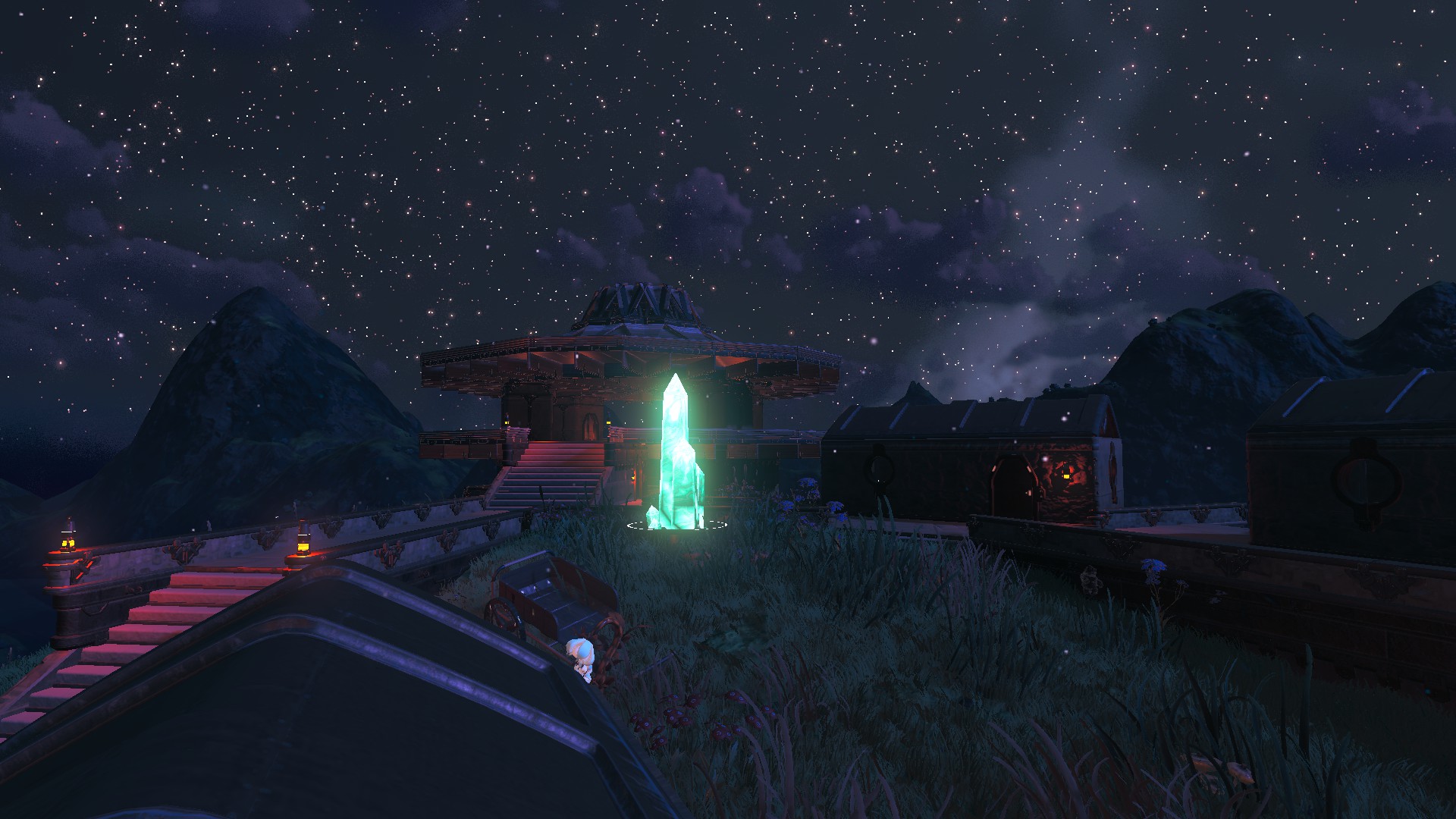
At the center of the plaza stands the large quartz formation, added to the space after the original founding as a deliberate upgrade to the plaza’s energetic environment. The crystal is not decorative in any conventional sense; it is functional. Scientific instruments have recorded the measurable calming frequencies the formation emits, and visitors consistently report feeling a low-level, settled resonance in the body when they move within its ambient field. The traveler approaches and notices the sensation: not dramatic, not disorienting, more like the way a room with good acoustics changes how sound feels in the ears. The quartz does its work quietly. The plaza neither explains nor advertises the effect; it simply lets the frequency environment do what it does, and attentive visitors notice on their own terms.
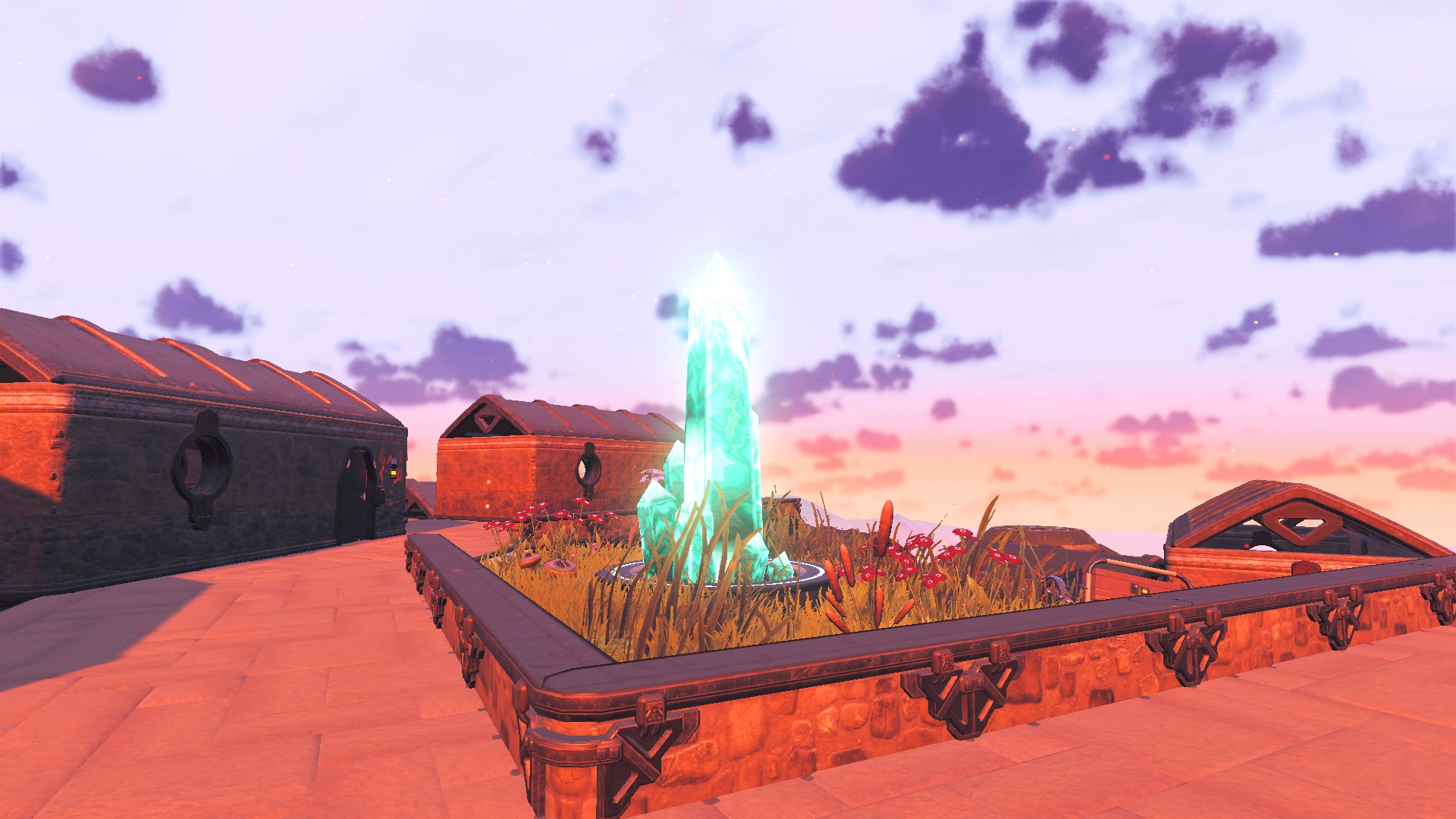
As afternoon light shifts toward evening, villagers begin arriving at the plaza in small groups and alone, shedding the weight of their working hours. This is the plaza’s oldest social function, the one that predates even the quartz installation: a place to stop, sit, and recover before heading home. The traveler watches locals settle onto the stone surfaces, faces loosening, shoulders dropping. Conversation, when it happens, is unhurried. The proximity to the meditation center means that the habits of stillness practiced inside that building spill outward into the plaza’s social life. Nobody rushes anyone. The traveler understands, watching this, that the plaza is not a tourist attraction dressed up as a local space; it is genuinely both, and the two uses coexist without friction because the quartz field and the open sky impose the same conditions on everyone who enters.
An open-air space sitting at the summit adjacent to the main meditation center. The elevation is immediate and physical: thinner air, wider sky, the village spreads far below. The plaza was established fifteen years after the meditation center itself, conceived by the villagers as a communal resting point where anyone seeking quiet could come without ceremony or appointment. That founding intention still shapes the atmosphere.

An open-air space sitting at the summit adjacent to the main meditation center. The elevation is immediate and physical: thinner air, wider sky, the village spreads far below. The plaza was established fifteen years after the meditation center itself, conceived by the villagers as a communal resting point where anyone seeking quiet could come without ceremony or appointment. That founding intention still shapes the atmosphere.
The fourth and final stop is the main meditation center at the summit, the destination the entire route has been building toward. Here, trained guides introduce visitors to specific meditation techniques drawn from MysticGek Ushusti’s scriptures, presented both as practical instruction and as a framework for understanding the journey they have just completed. The route’s progression (relaxation, clarity, stillness, and then meditation) is explained as a map of the human system: body, mind, and finally soul. The center’s interior is designed to support sustained inward attention, and visitors may stay for structured sessions or personal practice. Ushusti’s texts are available for reading, and guides can contextualize specific passages in relation to what travelers experienced at each shrine and plaza along the way.
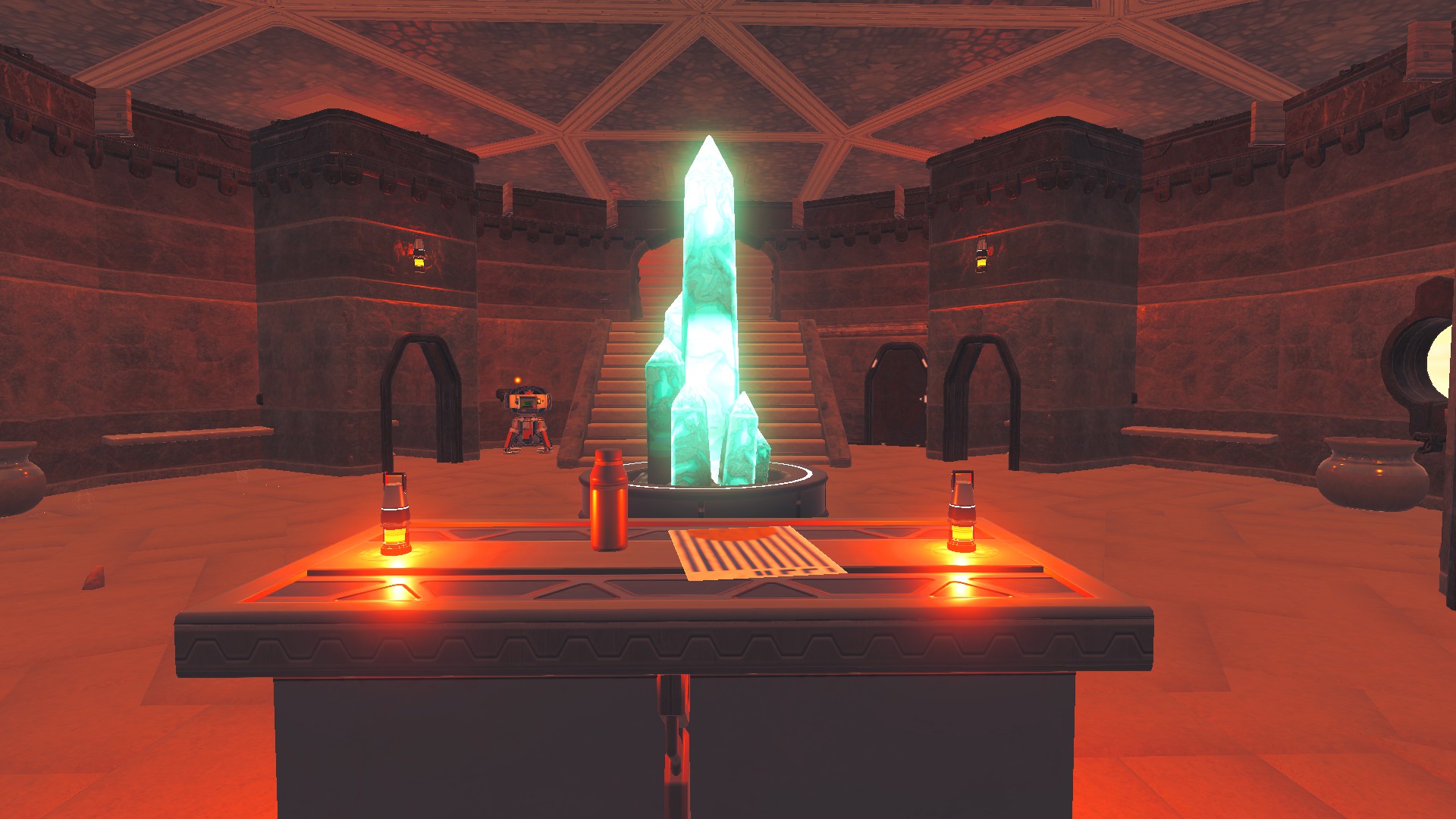
The temple is not a museum; it functions daily as a living space of practice, and travelers are welcome to sit alongside resident Geks during sessions. Ushisti’s own scriptures are housed here, available for reading with a guide’s assistance. The writing covers his observations on awareness, identity, and the relationship between stillness and action. The stakes for the visitor are personal: those who engage seriously with the sessions often report a shift in how they experience time and thought, effects that linger well after leaving the mountain.
The story of how Gigiers-Oino came to exist centers entirely on one figure: MysticGek Ushisti, a Gek who set out on a deeply personal journey toward self-knowledge and, without planning to, drew others into his orbit. Ushisti’s practice of meditation was so consistent and so openly conducted that other Geks began settling nearby, not out of organized religion or political will, but out of a shared pull toward the awareness he cultivated.
Over time, those settlers built homes, grew food, and formed the bonds that became the village. Ushisti never founded Gigiers-Oino in any formal sense; the community founded itself around the gravity of his inner work. His legacy is not a monument or a doctrine but a living spirit that the current inhabitants consciously carry forward.
As Ushisti spoke, members of the community transcribed his words on site, in the locations where the talks actually occurred. This was a real-time effort to capture the true intent and spirit of each session, and is the primary reason Ushisti’s teachings have survived with their context intact, and the village treats the texts as living documents rather than historical relics.

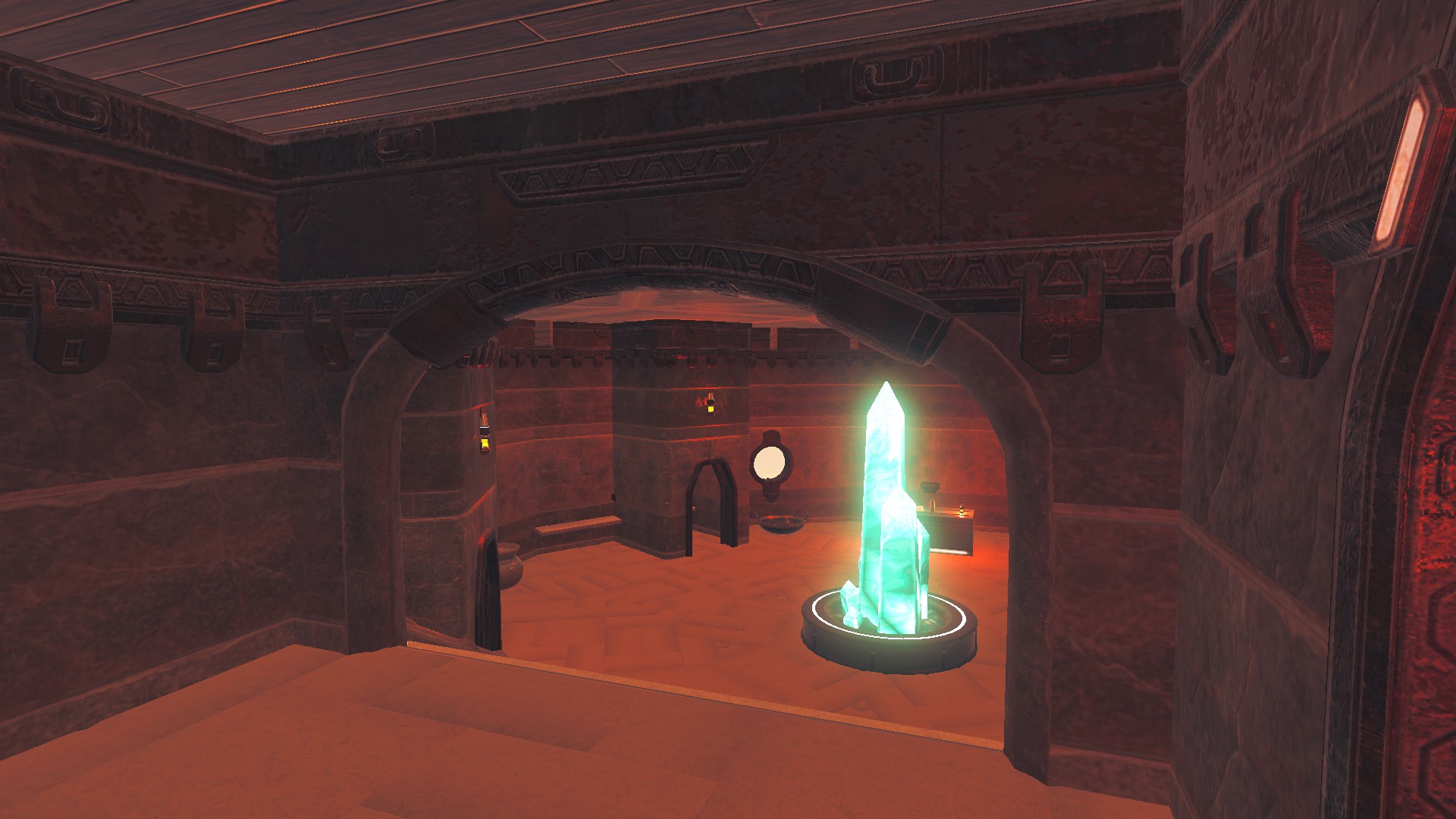
Gigiers Oino preserves and displays Ushisti’s teachings as a form of collective gratitude rather than religious observance. The distinction matters for visitors: there are no rituals of worship, no clergy, and no required beliefs. The community maintains the transcriptions, keeps the original talk-sites accessible, and trains local guides who can contextualize the texts for newcomers. The transformation Ushisti brought about in people is understood here as something that happened because of his authenticity, and the village’s approach to preservation reflects that understanding.
The central organizing principle of Gigiers Oino is self-knowledge: understanding one’s own nature and choosing what the community calls “the way of life.” Visitors should expect a place oriented around reflection, conversation, and personal inquiry rather than tourism in the conventional sense. The village offers guided readings of Ushisti’s transcribed talks, group discussions open to travelers, and walking routes that follow the locations where key talks were given. The atmosphere is quiet and deliberate.
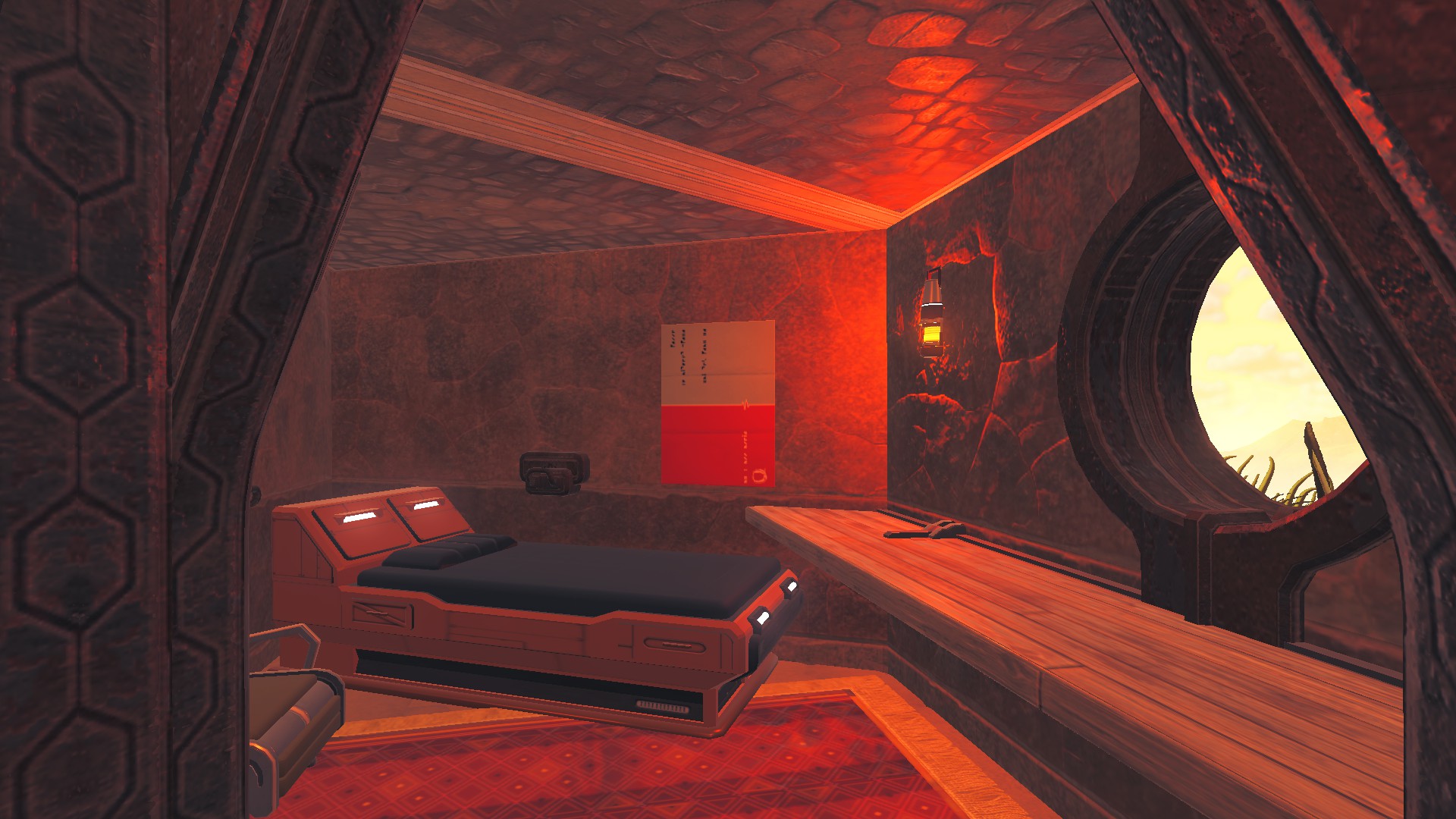
Access to Ushisti’s private quarters and working space as a priest is available exclusively through a guided tour, which must be arranged in advance through the temple scholars. The rooms have been preserved rather than restored, meaning visitors see the space as it was used rather than as it has been idealized. Tools of Ushisti’s priestly work, personal writing materials, and the physical arrangement of his meditation space give a concrete sense of his daily life. The guide contextualizes each object and room within the broader arc of Ushisti’s journey, making clear what he was working through during different periods of his life. This tour is the closest a traveler can come to understanding Ushisti not as a mythologized founder but as a specific individual who sat with specific doubts and found specific answers. Availability is limited to preserve the integrity of the space, and demand among serious visitors is high.
There is no other God than life itself,
To walk God’s path is to walk the path of life.
Trust what the path offers, is the best.
It is the best, because it is the only path.
This existence moves by its own will, and it is in its will that we find our own,
but you mustn’t forget that there must be synchronicity. Only in synchronicity are its will and ours carried out in unity and with purpose.
You came to life with a breath and you will leave it with a breath.
If you want to synchronize with life, you have to synchronize with your breath.
Life isn’t in a hurry, so your breath should not be either.
…follow your breath when inhaling…
…follow your breath when exhaling…Let this be your meditation
-Ushisti